
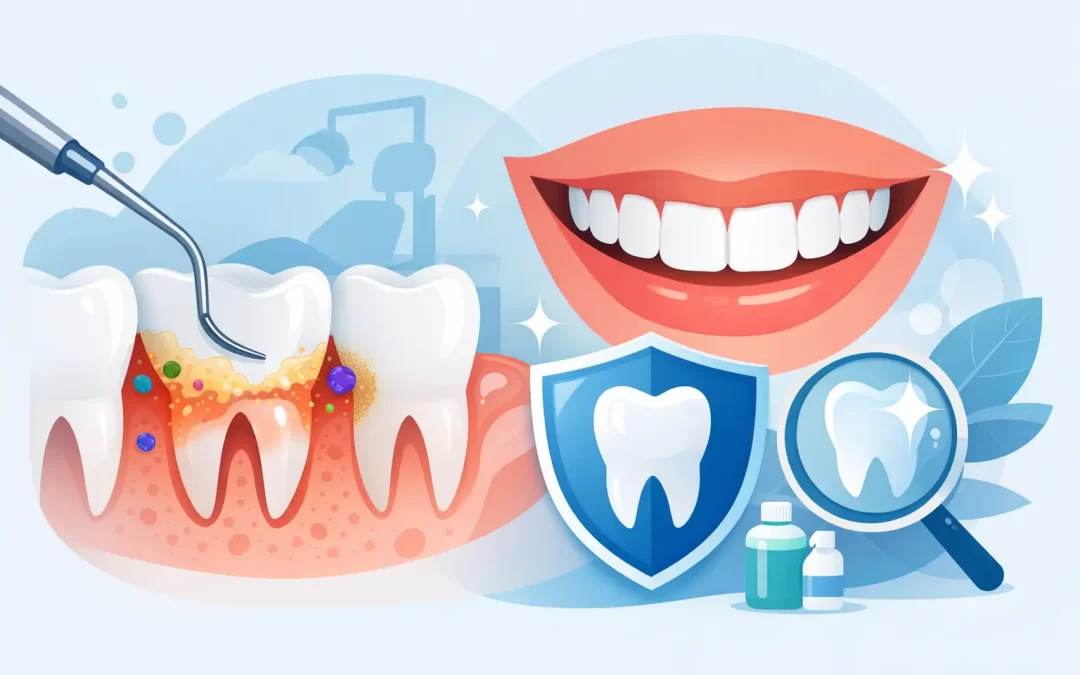
Bleeding when you brush, a lingering bad taste or gums that look swollen are not problems to brush off. Early gum disease treatment can often control infection before it causes lasting damage to the bone and tissues that hold your teeth in place. For families across Wyndham Vale, Tarneit and western Melbourne, acting early can mean simpler care, greater comfort and a better chance of keeping your natural smile for life.
Gum disease is common, but it is not something you need to simply live with. The right treatment depends on how far the condition has progressed, your general health, your home-care routine and whether bone around the teeth has already been affected. A personalised dental assessment provides the clear answers needed to move forward with confidence.
What gum disease looks and feels like
Gum disease begins when sticky bacterial plaque is left around the gumline. If it is not thoroughly removed, it can harden into calculus, sometimes called tartar. This cannot be removed with a toothbrush alone and can keep irritating the gums.
The earliest stage is gingivitis. Gums may bleed during brushing or flossing, appear red or puffy, or feel tender. Some people notice bad breath that returns soon after brushing. Gingivitis is often reversible with professional cleaning and consistent care at home.
When inflammation progresses beneath the gumline, it may become periodontitis. This is a more serious condition in which the supporting bone and fibres around teeth can gradually break down. It may cause gum recession, gaps that were not there before, loose teeth, changes to the way your bite feels or sensitivity caused by exposed root surfaces.
Periodontitis is not always painful, which is why regular dental visits matter. A person can feel generally well while the infection is quietly progressing. If you have noticed any change in your gums, teeth or breath, an examination is worthwhile rather than waiting for pain to develop.
Why early gum disease treatment matters
Healthy gums are the foundation of a healthy smile. When gum disease advances, it can threaten teeth that may otherwise be completely healthy. Treating it early is usually less involved and can reduce the risk of future tooth loss, complex restorative work and unexpected dental costs.
There is also a broader health reason to take gum inflammation seriously. Gum disease is linked with factors such as smoking, diabetes, hormonal changes, some medications, dry mouth and genetic susceptibility. It does not mean you have done anything wrong. It does mean your dental team may recommend a more tailored maintenance plan and, where relevant, encourage you to discuss health concerns with your GP.
For patients with diabetes, controlling gum infection and blood glucose levels can influence one another. Pregnancy can also make gums more prone to bleeding and swelling. In these situations, gentle professional monitoring is especially valuable.
How gum disease treatment is planned
A proper assessment starts with listening. Your dentist will ask about bleeding, sensitivity, bad breath, smoking or vaping, medications, health conditions and any dental anxiety you may have. They will examine the gums, measure the small spaces between gum and tooth, check for recession and tooth mobility, and may take dental X-rays to assess bone levels.
This information shows whether the issue is limited to surface inflammation or whether infection has reached below the gumline. It also helps identify areas that are difficult to clean because of crowding, old fillings, crowns or the position of particular teeth.
At 32 Pearls Dental Surgery, treatment planning is designed to be clear and personal. You should understand what has been found, what each recommended step is intended to achieve and what ongoing care is likely to involve. If cost is a concern, raise it early. Staging treatment where clinically appropriate and discussing available payment options can make care more manageable.
Professional cleaning for early gum inflammation
For gingivitis, a professional scale and clean may be all that is needed alongside improved daily cleaning at home. Modern hygiene approaches, including EMS Airflow and Guided Biofilm Therapy where suitable, can help remove plaque, staining and deposits with a focus on comfort.
Your clinician will also show you where plaque is collecting and how to clean more effectively. This may involve adjusting your brushing technique, choosing an appropriately sized interdental brush or using floss in areas where it works best. The most effective tool is the one you can use correctly and consistently.
Deep cleaning below the gumline
When pockets around teeth are deeper or calculus sits below the gumline, a standard clean is not enough. Non-surgical periodontal treatment, often called deep cleaning or root surface debridement, removes bacterial deposits from root surfaces beneath the gums.
Treatment may be completed over one or more appointments depending on the number of areas involved and your comfort. Local anaesthetic can be used when needed so the appointment is as comfortable as possible. Afterwards, mild tenderness or sensitivity can occur for a short time, particularly if there was significant inflammation or recession. Your dental team will explain what to expect and how to care for the area.
The aim is not to make the gums look perfect overnight. It is to reduce infection and inflammation so the gums can heal, pockets can become easier to maintain and the supporting structures have the best possible chance of stabilising.
Review and ongoing periodontal maintenance
Gum disease needs follow-up. After initial treatment, your dentist or hygienist will recheck gum health, pocket measurements, bleeding and how well plaque is being controlled. Some areas respond quickly; others require additional cleaning, changes to home care or more frequent maintenance visits.
For people with a history of periodontitis, three- to six-monthly maintenance may be recommended rather than waiting for a routine annual visit. The right interval depends on your individual risk and results. This continuing care is one of the strongest ways to protect the progress made during treatment.
In more advanced cases, referral to a specialist periodontist may be appropriate, particularly where surgery, complex bone management or difficult-to-control disease is involved. A good plan is not about offering one solution to everyone. It is about recommending the level of care your gums actually need.
What you can do at home
Professional care removes hardened deposits and treats areas below the gumline, but day-to-day plaque control determines how well treatment holds. Brush twice a day for two minutes with a soft toothbrush and fluoride toothpaste, angling the bristles gently towards the gumline. Brushing harder is not better and can worsen recession or sensitivity.
Clean between your teeth once daily. Interdental brushes are often very effective where there is enough space, while floss may suit tighter contacts. Your dentist can recommend the right size and method, because an ill-fitting interdental brush can be uncomfortable and less effective.
If your gums bleed when you begin cleaning between your teeth, do not automatically stop. Bleeding is often a sign of inflammation and may improve as plaque is removed consistently. However, if bleeding is heavy, persistent or accompanied by swelling, pain or a loose tooth, arrange a dental appointment promptly.
Smoking and vaping can make gum disease harder to treat and may mask bleeding, making the condition seem less obvious. Reducing or stopping is one of the most meaningful steps you can take for your gums as well as your overall health. A balanced diet, adequate water intake and managing dry mouth can also support oral health, although they do not replace thorough cleaning.
When to book a dental appointment
Book soon if you have gums that bleed repeatedly, bad breath that does not settle, pus around the gums, recession, increasing sensitivity, a loose tooth or a change in your bite. Do not wait for a dental emergency. Gum disease usually responds best when it is addressed before symptoms become severe.
If you feel nervous about treatment, let the clinic know when you book. Gentle, comfortable care begins with allowing enough time to talk through your concerns, explain each step and agree on a pace that feels manageable for you.
Your gums should support your everyday life without bleeding, soreness or worry. A timely check-up can turn a small concern into a practical plan for a healthier, more confident smile.
