
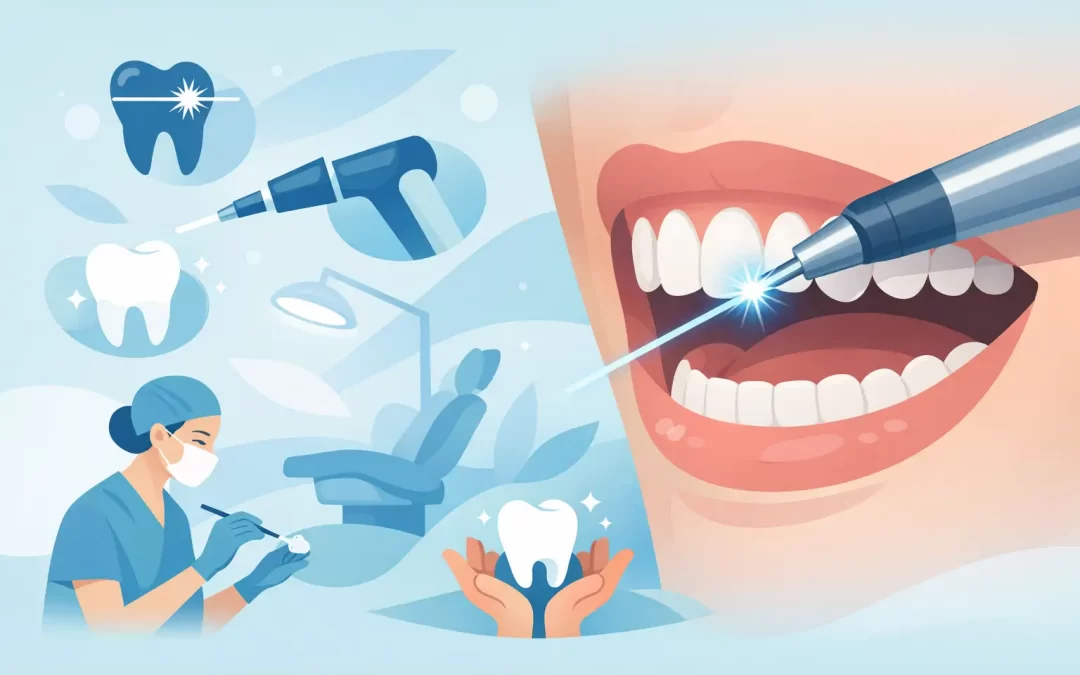
A sore, bleeding gum line or a nervous feeling before treatment can make even a routine dental visit feel daunting. So, what is laser dentistry? It is the use of a carefully controlled dental laser to treat selected teeth, gums and soft tissues with exceptional precision. For the right procedure, it can mean less vibration, less bleeding and a more comfortable experience than some conventional methods.
Laser dentistry is not a single treatment, and it does not replace every dental instrument. Rather, it is a modern tool your dentist may recommend when it offers a clear benefit for your oral health, comfort or healing. At 32 Pearls Dental Surgery, treatment is always planned around your individual needs, not simply the technology available.
What is laser dentistry used for?
A dental laser produces a focused beam of light energy. Different lasers interact with tissue in different ways. Some are designed mainly for soft tissue, such as the gums, while others may be used on certain hard-tissue procedures involving teeth.
Because the laser can target a very small area, it allows your dentist to work with gentle precision. In soft-tissue treatment, the laser can often cut and seal tiny blood vessels at the same time. This is why some patients experience less bleeding and swelling after suitable gum procedures.
Laser dentistry may be used to support treatments such as gum disease care, reshaping excess gum tissue, treating inflamed areas around teeth or implants, removing small soft-tissue lesions, and releasing restricted oral tissues in appropriate cases. It can also be helpful in selected cosmetic gum-contouring treatments, where creating a more balanced gum line may improve the appearance of a smile.
The exact use depends on the type of laser, the condition being treated and your dentist’s clinical assessment. A consultation is the best way to find out whether a laser is suitable for you.
Why patients often find laser treatment more comfortable
For many people, the sound, pressure and vibration of traditional dental instruments are just as stressful as the treatment itself. Laser procedures can feel quite different. There is often no drilling noise for soft-tissue work, and the treatment area can be managed with a high degree of control.
When a laser is appropriate, patients may benefit from:
- reduced bleeding during certain gum procedures
- less swelling and tenderness afterwards
- more precise removal of diseased or excess tissue
- reduced need for stitches in some cases
- a potentially faster and more comfortable healing period.
These benefits are not guaranteed for every person or every procedure. The extent of discomfort after treatment can still vary according to the area treated, the severity of infection or gum disease, your general health and how well you follow aftercare instructions.
Some laser procedures may be completed with little or no local anaesthetic. However, this should never be assumed. If a procedure could cause discomfort, your dentist will discuss anaesthetic options with you and make sure you feel properly comfortable before treatment begins. Gentle care means taking your concerns seriously, not asking you to push through pain.
Laser dentistry for gum disease treatment
Gum disease can begin quietly. You may notice bleeding when brushing, persistent bad breath, tender gums or teeth that seem to be getting longer. In more advanced cases, infection can affect the tissues and bone that hold your teeth in place.
Professional cleaning and good home care remain the foundation of gum disease treatment. Your dentist or hygienist may recommend scaling to remove hardened deposits and bacterial build-up from above and below the gum line. In selected cases, laser treatment may be used as part of a wider periodontal treatment plan to manage infected soft tissue and reduce bacteria in gum pockets.
A laser is not a shortcut that makes gum disease disappear permanently. Gum disease is a long-term condition that needs ongoing management. Regular reviews, daily brushing, cleaning between teeth and professional maintenance are essential to protect your gums and help prevent the condition from returning.
For patients with anxiety about gum treatment, the quieter and more targeted nature of laser care can make a real difference. Your dental team can explain each stage before it happens, pause when needed and help you feel in control throughout the appointment.
Gum contouring and smile appearance
Some people have a “gummy” smile because excess gum tissue covers more of the tooth surface than expected. Others have uneven gum levels that make teeth look mismatched, even when the teeth themselves are healthy.
Laser gum contouring can carefully reshape the gum line in suitable cases. The goal is not to create a one-size-fits-all smile, but to achieve natural-looking proportions that suit your face and teeth. Before cosmetic treatment, your dentist will check the health of your gums and identify whether the appearance is caused by gum tissue, tooth position, bite concerns or another factor.
Does laser dentistry replace the dental drill?
Not usually. This is one of the most common misunderstandings. While some lasers can be used for specific hard-tissue applications, traditional instruments are still often the safest and most effective option for fillings, crown preparation, root canal treatment and many other procedures.
For example, a tooth with deep decay may require conventional drilling to fully remove damaged tooth structure and prepare the tooth for a filling. A wisdom tooth procedure may require surgical instruments. In these situations, your dentist will choose the method that provides the most predictable result, not the method that sounds most appealing.
Laser dentistry is best viewed as one part of modern dental care. Just as digital imaging, EMS Airflow and Guided Biofilm Therapy can improve how particular problems are assessed or managed, a laser can add value when the treatment indication is right.
Is laser dental treatment safe?
When performed by a trained dental professional with the appropriate equipment and safety protocols, laser dentistry is a well-established option for selected treatments. You and the dental team will wear protective eyewear during the procedure, as each laser is designed to operate at a specific wavelength.
Your dentist will also review your medical history, medications and oral health before recommending treatment. This matters because healing can be affected by conditions such as diabetes, smoking, certain medications or active infection. If laser treatment is not the best choice, your dentist should explain the alternatives clearly.
You may notice a mild warmth or a distinct smell during some soft-tissue laser procedures. This is normal and is related to the laser interacting with tissue. Your dentist will let you know what to expect so there are no surprises.
What happens after laser dentistry?
Aftercare depends on the procedure. Following gum treatment or gum contouring, the area may feel tender for a few days. You may be asked to avoid spicy, crunchy or very hot foods temporarily, brush gently near the treated site and use any prescribed rinse or medication exactly as directed.
Keeping your mouth clean is particularly important after gum treatment. Your dentist may recommend a review appointment to check healing and make sure plaque and bacteria are being kept under control. If you develop increasing pain, swelling, bleeding that does not settle or signs of infection, contact the clinic promptly.
For many patients, the recovery is straightforward, but it is still a medical procedure. Giving the area time to heal and following personalised advice will support the best result.
How much does laser dentistry cost?
The cost of laser dentistry varies because the treatment itself varies. A small area of gum contouring is very different from laser-assisted periodontal care across several areas of the mouth. Your total cost may also depend on whether you need an examination, X-rays, cleaning, anaesthetic, follow-up care or other treatment as part of the plan.
Before proceeding, ask for a clear explanation of the recommended treatment, expected fees and payment options. For families managing dental costs, knowing the plan upfront can make decisions feel much less stressful. The most affordable option is not always the best value if it does not address the underlying problem properly.
If you have bleeding gums, discomfort around an implant, concerns about your gum line or anxiety about an upcoming procedure, a calm conversation is a good place to start. The right treatment is the one that protects your oral health while helping you feel informed, comfortable and confident in the dental chair.
