
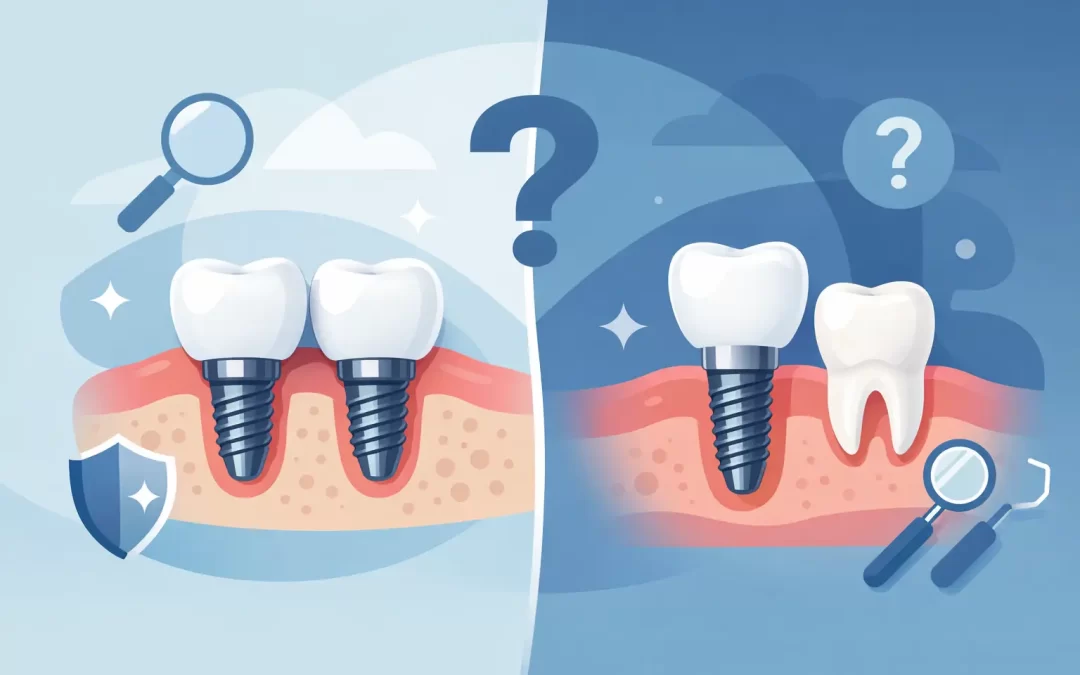
A missing front tooth can make you hesitate before smiling in a photo. A missing back tooth may be harder to notice, yet it can change how comfortably you chew and place extra pressure on neighbouring teeth. When people search for implant teeth or tooth replacement, they are usually looking for more than a cosmetic fix. They want a secure, natural-feeling way to eat, speak and smile with confidence again.
Dental implants can be an excellent long-term solution for one missing tooth, several teeth or a full arch. However, they are not the only option, and the right treatment depends on your oral health, bone support, timeline, budget and personal goals. A careful consultation gives you clear answers before you commit to treatment.
What are implant teeth or tooth replacements?
A dental implant replaces the root of a missing tooth. It is a small, medical-grade titanium fixture placed in the jawbone, where it gradually bonds with the bone during healing. Once the implant is stable, it can support a custom-made crown for one tooth, a bridge for multiple missing teeth, or a denture designed to fit more securely.
The visible tooth is not the implant itself. For a single missing tooth, the implant sits below the gum and a crown is attached above it. The crown is colour-matched and shaped to blend with your surrounding teeth, so the finished result can look very natural.
This distinction matters because an implant does more than fill a gap. By replacing a tooth root, it helps direct chewing forces into the jawbone. That stimulation can help preserve bone in the area over time, although every person’s bone response and treatment needs are different.
When is a single dental implant a good choice?
A single implant is often considered when one tooth is missing because of decay, a crack, gum disease, trauma or a previous extraction. It can be particularly helpful where the teeth on either side of the gap are healthy, as they do not need to be filed down to support a traditional bridge.
An implant may suit you if your gums are healthy, you have enough jawbone to support it, and you are able to maintain good daily oral hygiene. Adults of many ages can be candidates. Being older does not automatically rule out treatment, and neither does having worn dentures for years. The important consideration is your overall health, the condition of your mouth and whether treatment can be planned safely.
Smoking, uncontrolled diabetes, active gum disease and some medications can affect healing. This does not always mean implants are unsuitable, but it may mean that your dentist recommends treatment to improve gum health first, works closely with your medical practitioner, or discusses an alternative option.
If the tooth has only just been removed
In some cases, an implant can be placed at the same appointment as an extraction. In others, the site needs time to heal first. The decision depends on factors such as infection, bone condition, gum shape and the position of the tooth.
Immediate placement can reduce the number of surgical visits for suitable patients, but it is not automatically the best choice. A staged approach may give the area time to heal and allow for more predictable support, especially after a difficult extraction or where bone has been lost.
Implants, bridges and dentures: understanding the trade-offs
There is no one replacement method that suits every smile. The best option is the one that balances health, function, appearance, treatment time and affordability for you.
A conventional dental bridge is fixed in place and can replace a missing tooth without surgery. It may be a practical choice where the neighbouring teeth already need crowns or have large fillings. The trade-off is that those supporting teeth are prepared to hold the bridge, and cleaning under the replacement tooth requires extra care.
A removable partial denture can replace one or more teeth at a lower upfront cost and may be useful when several teeth are missing. Modern dentures can look natural, but they may feel bulkier than a fixed option and can move during eating or speaking. Some people later choose implants to help stabilise a denture.
A dental implant usually takes longer and has a higher initial investment than a denture or bridge. In return, it can offer a very stable, independent replacement that does not rely on adjacent teeth. The value of each option is personal. A clear treatment plan should explain the expected costs, likely lifespan, maintenance and alternatives without pressure.
The dental implant treatment process
Implant treatment is planned rather than rushed. Your dentist will examine your teeth and gums, review your health history and take detailed images of your jaw. Digital imaging helps assess bone height, width and the location of important structures, allowing the procedure to be planned with precision.
If there is insufficient bone, bone grafting may be recommended before or during implant placement. This can sound daunting, but it is a common part of planning for some patients. It provides a stronger foundation where the bone has shrunk after a tooth has been missing for some time.
The implant placement procedure is performed using local anaesthetic. Many patients are surprised by how manageable it feels, particularly when they understand each step and have a gentle team supporting them. If you feel anxious about dental treatment, tell your dentist early. Simple adjustments, clear communication and a paced appointment can make a meaningful difference to your comfort.
After placement, the implant needs time to integrate with the jawbone. Healing commonly takes several months, although timing varies according to the site, your bone quality and the type of restoration planned. You may have a temporary tooth replacement during this period, especially if the missing tooth is visible when you smile.
When healing is complete, impressions or digital scans are used to create your final crown, bridge or implant-supported denture. Your dentist will check how it looks, feels and bites before it is secured.
What does recovery feel like?
Most people experience some tenderness, swelling or bruising after implant surgery, particularly during the first few days. This is usually manageable with the advice and medication recommended by your dentist. Soft foods, gentle brushing and avoiding strenuous activity for the first day or two can help you recover comfortably.
It is wise to avoid smoking during healing because it can interfere with blood supply and increase the risk of complications. You should also follow instructions about eating, cleaning around the site and attending review appointments. Contact your dental team promptly if pain is worsening rather than improving, swelling becomes severe, or you have concerns about bleeding or infection.
Caring for implant teeth for the long term
Implants cannot develop decay, but the gums and bone around them still need protection. Inflammation around an implant can lead to bone loss if it is not identified and managed early. Good maintenance is one of the most important parts of protecting your investment.
Brush twice daily with a soft toothbrush and clean between your teeth every day. Your dentist or hygienist may recommend interdental brushes, floss designed for bridges or another cleaning aid suited to the shape of your restoration. Regular professional cleans and check-ups allow your dental team to monitor your gums, bite and implant crown.
If you grind or clench your teeth, a night splint may be recommended. Excess force can damage the crown, loosen screws or put pressure on the implant and your natural teeth. A well-fitted implant is strong, but it is not indestructible.
Questions to ask before choosing a dental implant
Before proceeding, ask what is causing the tooth loss and whether that issue has been fully treated. If gum disease led to the loss, for example, ongoing gum care is essential before and after implant treatment. It is also helpful to ask whether grafting is required, what temporary option will be available, how long treatment is likely to take and what maintenance will cost over time.
You should feel comfortable asking about payment arrangements as well. For families across Wyndham Vale, Tarneit and the western Melbourne corridor, unexpected dental treatment can be a real financial concern. At 32 Pearls Dental Surgery, personalised plans can include a discussion of available flexible and interest-free payment options, so you can make a decision with a clear understanding of the path ahead.
A missing tooth does not have to dictate how you eat, speak or feel about your smile. A thoughtful assessment can show whether an implant, bridge or denture is the most comfortable and dependable next step for your individual needs.
