
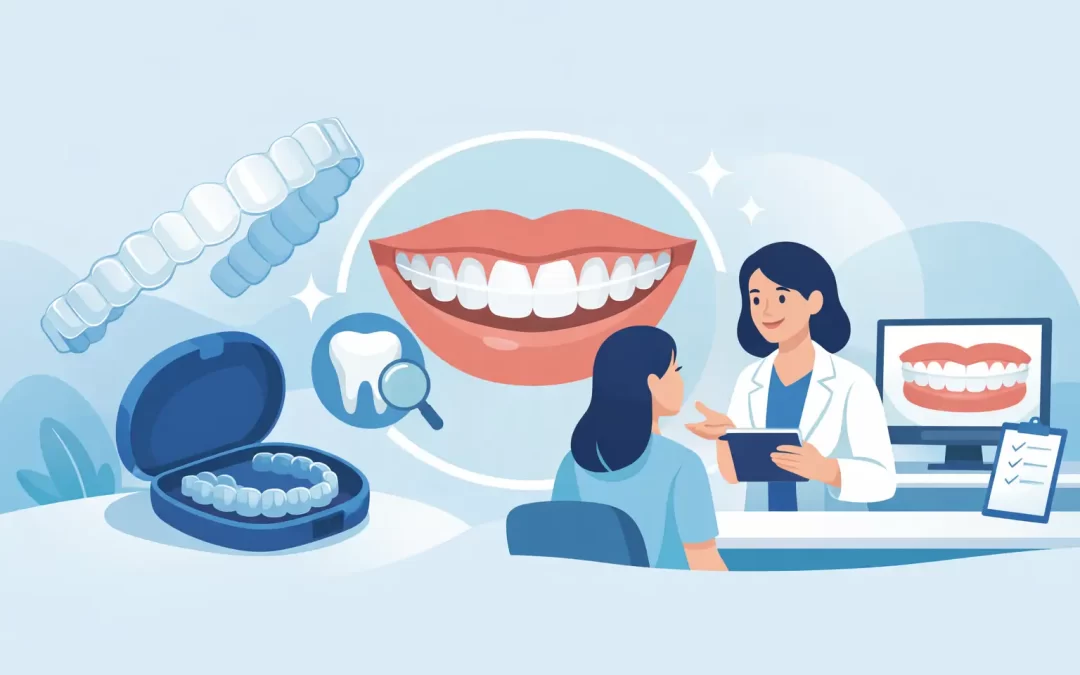
A smile can feel like a small thing until you find yourself hiding it in photos, covering your mouth when you laugh, or avoiding a conversation because you are self-conscious about crowded or uneven teeth. With Invisalign aligners, get a free smile assessment to start with clear answers about your teeth, your goals and the treatment options that may suit you.
For patients across Wyndham Vale, Tarneit and Melbourne’s western suburbs, a smile assessment is a comfortable first step. It is not about being pressured into treatment. It is an opportunity to talk through what you would like to change, understand whether clear aligners are appropriate, and receive personalised advice from a dental professional.
Invisalign Aligners – Get a Free Smile Assessment
Invisalign treatment uses a series of clear, removable aligners designed to gradually guide teeth into a better position. Each aligner is custom-made to fit your smile and is changed at intervals advised by your dentist. Because the aligners are clear, many people appreciate the discreet alternative to traditional fixed braces.
A free smile assessment gives your dentist a chance to look at the position of your teeth and bite, discuss the changes you are hoping for, and explain what may be possible. You might be concerned about a front tooth that sits behind another, gaps between teeth, mild crowding, or teeth that have shifted since earlier orthodontic treatment. These are common reasons patients ask about Invisalign.
The assessment also considers the bigger picture. Straightening teeth is not only about appearance. In some cases, improved alignment can make it easier to clean around teeth and maintain healthy gums. However, every smile is different, and the right recommendation depends on your oral health, bite and the complexity of tooth movement needed.
What Happens at a Smile Assessment?
Your appointment should feel clear, calm and focused on you. The first conversation is usually about your concerns and what you would like your smile to look and feel like. You may want a subtle improvement before a wedding, a more confident smile for work, or a long-term solution to teeth that have gradually moved over time.
Your dentist will examine your teeth, gums and bite. If you have any decay, gum inflammation, worn teeth or existing dental work, these factors need to be considered before orthodontic treatment begins. Healthy teeth and gums provide the best foundation for moving teeth safely.
Where appropriate, digital scans or photographs may be used to build a detailed picture of your smile. Modern scanning technology can be more comfortable than traditional impression materials and helps with precise treatment planning. Your dentist can then explain the likely pathway, including the estimated treatment time, how often reviews may be needed and what sort of result is realistic for your individual case.
This is also the right time to ask practical questions. You can discuss costs, payment options and whether interest-free payment plans may help make treatment more manageable. A well-planned treatment should fit your dental needs and your everyday life.
Why Adults Choose Clear Aligners
Many adults put off orthodontic treatment because they assume braces are only for teenagers or worry that fixed brackets will be too noticeable at work. Clear aligners can be a practical option for suitable adult patients because they are designed to be discreet and removable.
You can take aligners out for meals, brushing and flossing. This makes it easier to continue enjoying your usual foods and maintain a thorough oral hygiene routine. The key is consistency: aligners need to be worn for the recommended number of hours each day to keep treatment moving as planned.
That flexibility does involve responsibility. Aligners can be misplaced, left out for too long or damaged if they are not stored properly. For some patients, traditional braces may be the more reliable choice, particularly where tooth movements are more complex or regular aligner wear would be difficult. Your dentist will explain these trade-offs honestly rather than recommending a one-size-fits-all solution.
Clear aligners can help with a range of concerns
Invisalign may be considered for mild to more involved orthodontic concerns, depending on the assessment. These can include crowding, spacing, rotated teeth, bite concerns and relapse after previous braces. Not every issue can be treated in exactly the same way, and some cases may require attachments, small enamel adjustments, additional aligners or another orthodontic approach.
Attachments are tiny, tooth-coloured shapes placed temporarily on selected teeth to help the aligners apply gentle, controlled pressure. They are a normal part of many treatment plans and are designed to be discreet. Knowing about them early helps avoid surprises and allows you to make a confident decision.
Comfort, Care and a Plan That Makes Sense
Starting orthodontic treatment can feel like a big decision, especially if you are nervous about dental appointments. At 32 Pearls Dental Surgery, the focus is on personalised, gentle care and clear explanations at every stage. You should know what is happening, why it is recommended and what your next step will be.
Most people notice a feeling of pressure when changing into a new set of aligners. This is generally a sign that the aligners are working to move teeth gradually. Any tenderness is usually temporary, but it is still worth discussing with your dentist if you have persistent discomfort, rubbing or concerns about how an aligner fits.
Treatment duration varies. Small cosmetic adjustments may take only a few months, while more complex changes can take longer. Wearing aligners as instructed, attending review appointments and following care advice all influence the final result. Once treatment is complete, retainers are essential. Teeth naturally have a tendency to shift, so retainers help protect the time and investment you have made in your smile.
Is Invisalign Right for You?
The best candidates are often people with healthy teeth and gums who can commit to wearing their aligners consistently. But suitability is not simply a matter of age or how straight your teeth appear. Your bite, jaw position, gum health, previous dental treatment and goals all matter.
If you have crowns, bridges, implants or veneers, you may still be able to consider orthodontic treatment, although planning requires additional care. Teeth with active gum disease or untreated decay should be stabilised first. In some situations, your dentist may advise another treatment option that will give you a safer or more predictable outcome.
A free smile assessment is valuable because it replaces guesswork with an individual plan. Rather than comparing your teeth with images online, you can receive professional guidance based on your own oral health and the changes you want to achieve.
If a straighter smile has been on your mind for months or years, there is no need to decide everything at once. Book a free smile assessment, bring your questions, and take the first comfortable step towards a smile that feels more like you.
