
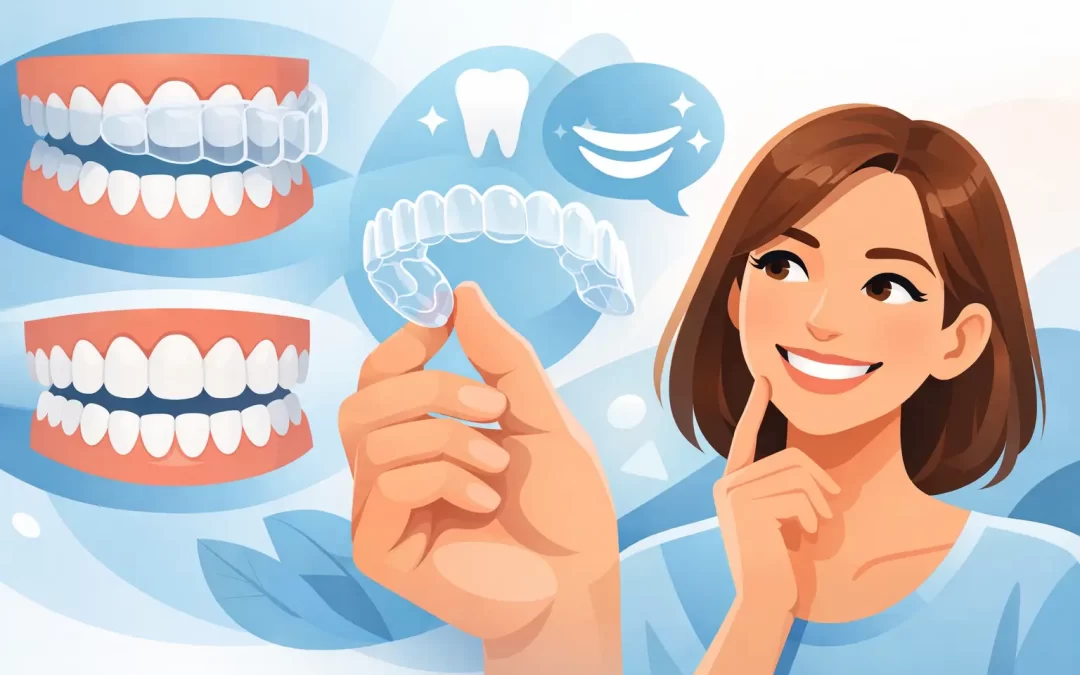
A crowded lower tooth, a gap that catches your eye in photos, or teeth that have shifted since earlier orthodontic treatment can make you more self-conscious than you expect. Invisalign treatment offers a discreet, modern way to straighten teeth without the look and feel of traditional fixed braces. For many adults and teenagers across Wyndham Vale, Tarneit and Melbourne’s west, it can be a comfortable option that fits around work, school and family life.
Clear aligners are not a one-size-fits-all cosmetic product. The best results come from a detailed assessment, careful planning and regular professional supervision. Understanding how the process works can help you decide whether clear aligners are the right choice for your smile.
What is Invisalign treatment?
Invisalign treatment uses a sequence of custom-made, clear plastic aligners to gradually move your teeth into a planned position. Each aligner is designed to apply gentle, controlled pressure to particular teeth. As you progress through the series, your teeth move in small stages towards the final result.
The aligners are removable, which is one of their most appealing features. You take them out to eat, drink anything other than water, brush and floss. This means there are no brackets or wires to work around at mealtimes, and maintaining your usual oral hygiene routine is generally more straightforward.
Most patients wear their aligners for around 20 to 22 hours each day. They are usually changed every one to two weeks, depending on your individual treatment plan. Consistency matters. Wearing aligners only when it is convenient can slow tooth movement and affect the accuracy of your result.
Which smile concerns can clear aligners help treat?
Clear aligners can be suitable for a wide range of orthodontic concerns, including mild to complex cases. They may be used to address crowding, spacing, crooked teeth, bite concerns and teeth that have moved after previous braces.
Whether aligners are appropriate depends on much more than how straight your front teeth appear. Your dentist needs to assess the way your upper and lower teeth meet, the health of your gums and bone, tooth shape, existing restorations and the amount of movement required. In some cases, fixed braces or another approach may provide more predictable control, particularly where there are significant bite discrepancies or complex tooth movements.
A personalised consultation gives you a clear answer. It also avoids starting treatment based on assumptions or photographs alone.
Invisalign treatment for adults
Many adults choose clear aligners because they are subtle in professional and social settings. The aligners are transparent, although they are not completely invisible at close range. Small tooth-coloured attachments are often needed to help certain teeth move efficiently. These are discreet, but you may notice them when looking closely in the mirror.
For adults with busy schedules, the removable nature of aligners can be helpful. You can continue enjoying most foods without avoiding hard, sticky or crunchy options, provided you remove the trays first. The trade-off is responsibility: aligners need to be worn as prescribed and stored safely whenever they are out. A napkin is an easy place to lose them at a café or restaurant.
Invisalign treatment for teenagers
Clear aligners can also suit teenagers who are ready to take ownership of their treatment. They may appreciate being able to remove aligners for sport, music or special occasions. However, successful treatment still relies on wearing them consistently and keeping them clean.
Parents can feel reassured by regular reviews that allow the dental team to monitor progress. If treatment is not tracking as expected, it is better to identify that early and adjust the plan where needed.
What happens during the treatment process?
Your first appointment is about listening as well as assessing. You may want straighter teeth for an upcoming wedding, greater confidence at work, easier cleaning or a smile that better reflects how you feel. Your dentist will examine your teeth and gums, discuss your concerns and check whether orthodontic treatment is suitable at this stage.
Digital scans, photographs and X-rays may be used to create a detailed picture of your mouth. These records help map tooth movement and identify any issues that should be managed first, such as decay, gum inflammation or a cracked tooth. Healthy teeth and gums provide the right foundation for orthodontic care.
Once your plan is approved, your custom aligners are made. At your fitting appointment, you will learn how to insert and remove them, care for them and follow your wear schedule. Some patients need attachments, which are small tooth-coloured shapes bonded to selected teeth. Others may require very slight space creation between teeth, known as interproximal reduction, to allow teeth to move into a more balanced position. This is planned carefully and is usually minimal.
Review appointments are scheduled throughout treatment to make sure your teeth are moving safely and as intended. Treatment length varies. Simple alignment cases may take several months, while more involved movements can take 12 to 18 months or longer. Your dentist can provide a more realistic timeframe after examining your individual needs.
Comfort, care and everyday habits
It is normal to feel pressure or tightness when starting a new aligner. This usually settles within a day or two and is a sign that the aligner is active. Clear aligners have smooth edges and no metal wires, which many patients find more comfortable than fixed appliances. Still, every mouth is different, and minor irritation can occur.
Keeping your aligners clean is simple but essential. Rinse them after removing them, brush them gently with a soft toothbrush and clean your teeth before placing them back in. Avoid hot water, as heat can distort the plastic. Coffee, tea, soft drink and wine can stain aligners, so remove them before drinking these beverages where possible.
Oral hygiene deserves extra attention during any orthodontic treatment. Brushing twice daily with fluoride toothpaste, cleaning between the teeth and attending regular dental check-ups can help protect against decay and gum disease while your smile changes. If you have noticed bleeding gums, sensitivity or persistent bad breath, raise it before starting aligner treatment rather than waiting.
The result does not end when aligners do
After the active movement phase, retainers help hold teeth in their new positions. Teeth naturally have a tendency to shift over time, even after braces or aligners. Retainer wear is therefore a long-term part of protecting your investment in your smile.
Your dentist will explain the retainer options that suit your case and how often you need to wear them. Some people need retainers mostly at night, while others may require a different schedule initially. Following this guidance is the simplest way to reduce the risk of unwanted movement later.
It is also worth considering the wider appearance and health of your smile. Once teeth are aligned, some patients choose whitening, replacement of old restorations or edge bonding for small chips. These treatments should be discussed in the right order, because moving teeth can change the position and appearance of existing crowns, veneers or fillings.
Choosing a local provider for clear aligners
A clear aligner system is only one part of orthodontic care. Your treatment experience depends on the quality of your assessment, the precision of the planning and the support you receive along the way. Look for a practice that takes time to explain your options, welcomes questions and can provide ongoing general dental care while you are in treatment.
At 32 Pearls Dental Surgery, Invisalign consultations are approached with the same focus on personalised, comfortable care as every other treatment. Your dentist can assess your smile, talk through realistic outcomes and explain the expected timeframe, costs and available payment arrangements before you commit.
If you have been hiding your smile, taking the first step does not mean you need to decide on treatment immediately. A consultation can simply give you clear, professional advice and the confidence to choose the option that feels right for your teeth, lifestyle and future smile.
