
If you’re missing teeth, you’ve probably heard dental implants in Wyndham Vale are considered to be the gold standard for replacement. But the “gold standard” does not tell you what will happen once you’ve said yes to treatment. Not knowing what you can anticipate is often the main cause of stress for patients.
There’s a good thing: it’s true that the dental implant process is far more reliable and systematic than what most people imagine. It’s not a single procedure, but rather an assortment of well-planned, smaller stages that give your mouth time to heal before proceeding to the next stage. In this article we’ll go over the exact procedure that takes place at each step and how long it usually takes, and what you can do to make recovery as soon as possible. .
What Is a Dental Implant in Wyndham Vale, Exactly?
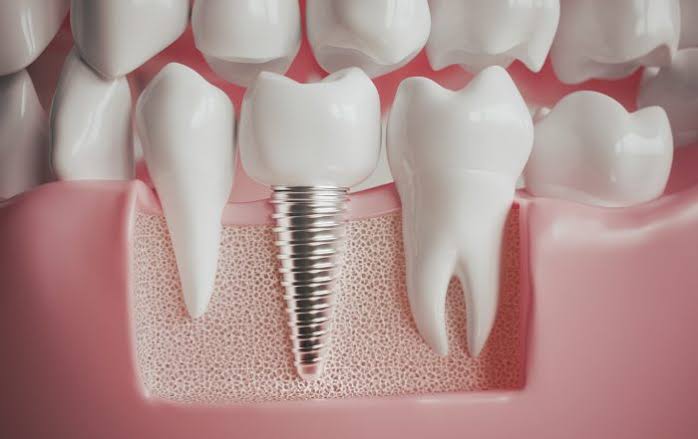
The dental implant is a small titanium (or titanium alloy) post that’s inserted in the jawbone and functions as a tooth-like substitute. Once it’s fused to the bone through a process known as osteointegration, a customised crown is inserted to it, resulting in the appearance, feel as, feels, and performance of a natural tooth.
In contrast to a bridge that relies on nearby teeth to provide support or a denture that rests on the gums, an implant is secured directly to the bone. This is the reason why implants are often suggested, as they maintain jawbone density, do not rely on the other teeth, and can last for years if they are treated with maintenance.
Step 1: Initial Consultation and Assessment
Each implant journey begins with a thorough examination. Your dentist will:
- Get X-rays or take a 3D CT scan to assess the structure and density of your jawbone
- Examine your dental and medical background
- Make sure you are in good health remaining teeth and gums.
- Set out your plans, timeframe as well as any concerns you may have
It is also the point in which your dentist will determine if you have sufficient healthy bone to support an implant or if a bone graft may be required in the beginning (more on that later).
What If You Don’t Have Enough Bone?
Bone loss is common following teeth have been missing for some time because the jawbone requires stimulation from a tooth root to keep its density. If a scan shows that there isn’t enough bone is present, the procedure of an bone graft could be suggested -it’s a simple procedure that is used to add bone to the area, and gives it a period of 3-6 months to heal and build up before the implant can be placed. It’s not necessary for everyone but it’s worthwhile to know it’s a standard aspect of the procedure for certain patients.
Step 2: Placing the Implant
After your dentist has confirmed that you’re a suitable candidate, the actual implant is put in. It’s a minor surgery that’s performed under local anaesthetic. many patients say it’s much more relaxing than they had hoped for.
Here’s how it happens:
- The area is completely numbed.
- A small hole is created within the gums to allow access to the jawbone.
- An implant post made of titanium is meticulously implanted in the bone.
- The gum is then closed to (or over) the implant by stitching.
- A cover for protection or a temporary healing cap could be affixed on top.
The procedure is typically 30-60 minutes for each implant. The slight discomfort and swelling after the procedure is normal, and many patients can recover with non-prescription painkillers.
Step 3: The Healing (Osseointegration) Period
This is the part that requires patience, and it’s also the one that helps make implants last over the long term. After 3 to 6 months the jawbone slowly joins implants made of titanium. This process of biological bonding is the reason why implants have exceptional durability and strength, much more than what a denture or bridge can provide.
In this time of healing during this time, you could be offered an interim tooth or removable option for wearing so that your smile and capacity to chew won’t be affected as things heal beneath.
Tips for a Smooth Healing Period
- Keep eating food items that are soft for the initial few days following the surgery.
- Beware of smoking cigarettes, which could delay healing significantly and increase the risk of failure
- Maintain a high level of oral hygiene around the healing area
- Keep track of all follow-up visits so that your dentist can track the progress of your treatment
Step 4: Attaching the Abutment
When osseointegration is completed the small connector piece known as the Abutment is affixed on the implant’s post. This is the part that the final crown is fixed to. In some instances, the abutment is put in the same manner as the first implant. In other instances, it’s a quick time, a separate appointment after healing has been confirmed.
Step 5: Fitting the Final Crown
This is the part that patients are most excited about. The dentist will take the impression (or digital scan) of your mouth and create a custom-designed crown that is shaped, size and shaded so that it blends naturally with your teeth. After it is completed, the crown is fitted securely onto the abutment.
Then, you’ll find that your brand-new tooth will function just like a normal tooth that is able to bite, chew and brush in a normal way.
How Long Does the Whole Process Take?
It’s one of the most frequently asked queries we receive The truth is that it’s based on the specifics of your situation. For a general rule of thumb:
- Simple case (good bones, not a grafts needed) approximately 3 to 4 months from initial placement to the final crown
- Bone Graft Require: could require between 6 and 9 months to complete, after healing time i consideration.
- Full-arch or multiple implants: Timelines vary and should be discussed in detail with your dentist.
Although that may seem like an extended period of time, keep in mind that the majority of it is passive healing. You’re not sitting in a chair for a long time and only attending regular check-ups.
Are Dental Implants Worth It?
For patients with missing the one or two teeth implants can provide real, long-lasting benefits:
- It’s as natural teeth
- Keep the density of jawbones and bone density, in contrast to dentures which could accelerate bone loss over time.
- Do not affect adjacent teeth as opposed to bridges
- Extremely robust typically lasting for 20+ years or an entire lifetime if taken care of
- Restore chewing function to full with confidence to your teeth
The upfront cost is greater than a bridge or denture however the value over time is in comfort functionality, comfort, and avoiding repeated replacements is precisely why implants are regarded as the gold standard.
Is a Dental Implant Right for You?
Every mouth is unique The best method to determine whether you’re a candidate is to have a thorough consultation by X-rays, or a scan to evaluate the condition of your gums and bones. Healthy general health, good gums and an adequate jawbone are the primary aspects, however, even if you’ve been previously told that you were not a good candidate treatment options such as bone grafting generally not the scenario.
Ready to Explore Dental Implants?
If you’re missing your tooth and need a permanent, natural-looking solution, our team at 32 Pearls Dental Surgery will guide you through each step, starting with your initial scan through to the final crown. Schedule an appointment for a dental implant consultation now to 32 Pearls Dental Surgery and learn what your timeline for treatment will be like.
Related reading: Dental Implants in Wyndham Vale · Dental Implants in Werribee · Dental Implants in Manor Lakes
